the7stars

Coppafeel!

Breast cancer isn’t front of mind for young people. For many 18–24s, it feels like a future problem, not a present one, with over a third saying it doesn’t feel relevant to them. Yet early detection is critical. Building the habit of regular checking from a young age can save lives.

At the same time, this audience is highly emotionally aware. They prioritise mental health, relationships and self reflection, but are less connected to their physical health. CoppaFeel!’s challenge was to bridge that gap, making a serious issue feel relevant, normal and actionable for a generation who already understands what it means to ‘feel something’.

The Brief

The strategy for 2025 was built around one simple ambition: make chest-checking feel like a natural, everyday behaviour. To achieve this, Coppafeel! needed to reposition checking from something clinical and occasional into something instinctive and habitual. That meant moving away from traditional awareness tactics and instead embedding the message into the emotional and cultural world young people already inhabit.

Big Idea

They identified a powerful insight: young people are fluent in feelings. They constantly check in with their emotions, talk about them and trust them. So, we designed a campaign that connected emotional awareness with physical awareness. If we could link the idea of ‘feeling something isn’t quite right’ emotionally with physically checking their chest, we could create a behaviour that felt intuitive rather than instructed.

The plan for the year was to build this association consistently and at scale. We would show up across key moments in the youth calendar e.g. summer and Freshers’ season, using high reach channels to repeatedly and gently reinforce the same behaviour. The role of media was clear; be present in the places young people live their lives, create familiarity through repetition and make the message feel like a normal part of their everyday environment.

What We Did

The campaign ran across two key bursts, summer and Breast Cancer Awareness Month, aligning with moments when young audiences are most visible, social and open to forming new habits.

We built a fully integrated channel plan, with each platform delivering a specific role.

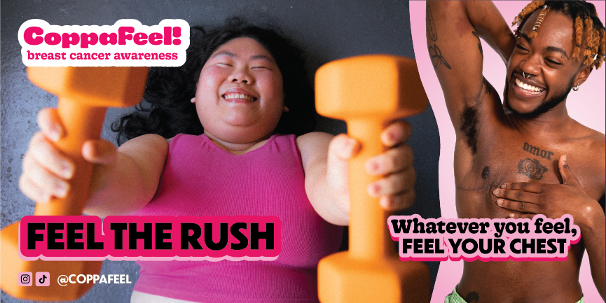
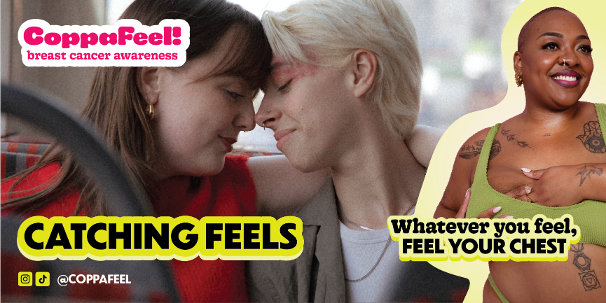
OOH targeted high footfall urban environments and student heavy cities. We focused on formats across transport, malls and high streets to ensure the message was consistently visible in the everyday moments where habits naturally form.

Social platforms such as TikTok, Snapchat and Instagram, extended reach into daily scroll behaviour, delivering short-form, culturally relevant content that felt native to each environment and reinforced the message through frequency.

YouTube provided longer-form, contextual placements, allowing us to land the emotional storytelling in a more immersive way and deepen understanding of the message.

Audio added another layer of presence, with host read placements on Spotify’s The Girls Bathroom ensuring the campaign showed up in trusted, intimate listening moments, where advice and self reflection already sit naturally.

Together, this channel mix allowed us to surround young people with a consistent message across physical, digital and personal spaces, turning a simple nudge into a repeated, memorable behaviour cue.

Using the7stars’ CoppaTrack, we went beyond surface metrics to understand how behaviours and attitudes were shifting. We uncovered that the biggest barrier to checking is still perceived lack of relevance (36%), reinforcing the importance of the campaign’s strategy to normalise the behaviour early.

Confidence in noticing a change remained strong at 59%.

Understanding that breast cancer can affect any age has increased significantly, rising from 78% to 84%.